The International Association
of Hyperpolyglots
HYPIA
Est. 2016
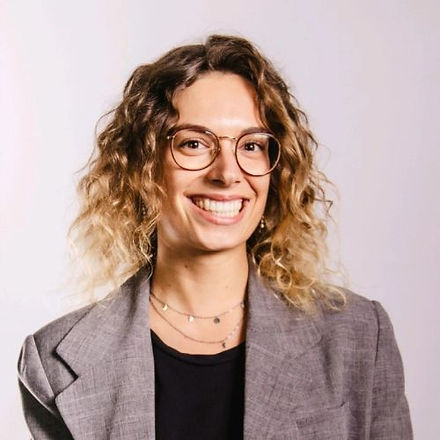
Interview with
Carla Garcia Clar
Name: Carla García Clar
Nationality or Ethnicity: Spanish
Where do you live?: Just moved back to Mallorca after a year in Leeuwarden (the Netherlands) and 7 years of not living on the island.
Languages: Spanish, Catalan (both Mallorcan and Central Catalan), English, German, Italian, Spanish Sign Language (also known as LSE), French and Dutch. Currently learning Portuguese.
Member since:
11 de septiembre de 2025
1. What’s your story? How did you get into all these languages?
At home, I have always spoken two languages: Spanish – with my father and his family and Mallorcan Catalan – with my mother and her family. I believe this bilingualism already gave me the awareness of and curiosity about other languages, which led me to want to learn English. After some years, in my first year of high school I had the chance to choose German as an optional subject, which I did, encouraged by my mum and my primary school teacher, who believed I had a natural talent and passion for languages. Back then, I thought that passion was exclusive to English. Nonetheless, they were right and my interest for languages grew, which eventually led me to study a bachelor’s degree in Modern Languages, Cultures and Communication in Madrid. There, I also took up Italian in addition to English, German and Spanish.
At the same time, I practised Italian with some Italian friends and improved my German by spending an Erasmus year in Bonn, working for four summers on a German cruise ship and teaching German as an auxiliary lecturer at my Spanish university. Additionally, I started learning Spanish Sign Language through two courses in Madrid (one online and the other in person). I took it up again two years later in Dublin with an online university course at B1 level. This happened two years later, after living for a year in the Irish capital, where I moved following my studies. There, I worked in two multinational companies with German, although in the first company I also eventually worked with Spanish, Catalan, English and Italian, which I also used with my colleagues. Moreover, I made French friends, which motivated me to finally learn their language, which I had wanted for years.
After two years in Dublin, I left my job to move to Leeuwarden to pursue a master’s degree in Multilingualism and Language Planning and Policy, where I also learnt some Frisian during my internship at the Language Policy Department of the Provincie Fryslân (the regional government). During this one-year stay in the Netherlands, I learnt Dutch and put it into practice with native speakers.
Besides, another factor that strengthened my interest in languages, and specifically in language policy, is the fact that Mallorcan is wrongly regarded by many people as an incorrect, informal or even vulgar variety of Catalan, which must therefore be “corrected” in favour of Central (or even Barcelonian) Catalan. These language ideologies and attitudes were present throughout my education in Mallorca, from primary school to baccalaureate, and had a huge impact on my confidence and on my relationship with the Catalan language and my native variety. Given that the same also happens to most Mallorcan speakers, not only did I want to study this master's but I also dedicated my master’s thesis to this topic in order to raise awareness and create a positive impact by showing that all varieties have the same value and importance.
2. Which language(s) do you wish you could spend more time practising?
I would like to be able to practise Italian, French and Spanish Sign Language regularly. I miss using these languages in my daily life, or at least on a weekly or monthly basis. This is because I no longer have any contact with native Italian speakers and, regarding the other two languages, I am in touch with only one speaker of each. However, due to being extremely busy with my master’s and additional responsibilities, I have not been able to speak, or sign, with them regularly over the past year. Once I have fully settled into this new stage of my life, I want to change that.
In addition, throughout the four years of my bachelor’s degree I attempted to find native signers of Spanish Sign Language in order to make friends, practise the language and learn more about their community, culture and perspective of life. Nevertheless, in most cases, even if they replied, they never wanted to meet up. After this happened numerous times, I got the impression that it is really difficult to establish contact with this community. Still, I did make a deaf friend during the in-person course in Madrid, which motivated me to continue learning and improving the language.
3. What are some languages you’d like to learn in the future?
I have started learning Portuguese, which I practised in real life for the first time last June when I spent two weeks in Portugal. Thanks to its similarity with the Romance languages I speak, the geographical closeness to the country where I was born and have lived for almost all my life, and also thanks to my many friendships and contact with Brazilians during the two years I lived in Dublin, I am able to understand almost everything and I also managed to learn a lot of vocabulary. Nonetheless, on some occasions during the trip, when I did not know the terms, the correct conjugation or hesitated whether it was said the same way as in Spanish, I resorted to using socalled Portuñol (a mixture of Portuguese and Spanish). This is why I am currently learning the language in order to properly learn it. Likewise, I want to learn Galician, since being another Romance language and lying halfway between Portuguese, Catalan and Spanish, I am convinced that I can learn it quickly, as I also understand practically everything thanks to the language similarities and by following content in this language on YouTube.
4. So let’s be honest, which language has the most charm for you?
I honestly love listening to all of them and find that each has its own charm, even those that are not considered “attractive” by many, such as Germanic languages like German or Dutch. And all sign languages look like art to me, which is why I also love to watch them. Therefore, I find it really difficult to choose just one language, but if I had to, I believe I would choose Catalan, specifically Mallorcan Catalan, or even the Mallorcan from Palma, as to me it sounds melodic – close to Italian, but still orally comprehensible, since other subvarieties of the island tend to be harder to understand for speakers of other varieties due to their phonetics and prosody being different from mine. Nevertheless, I am aware that this preference is totally biased, as it comes from my strong emotional connection to my mother tongue and from all the discrimination it faces from other varieties and even from some Mallorcan speakers themselves. The latter only strengthens my emotional attachment and sense of responsibility to use it, protect it and promote it.
5. What’s the greatest pleasure you get from speaking so many languages?
The greatest pleasure I get from speaking eight languages is the ability to communicate with so many people, as it is both enriching and fascinating. It allows me to learn and grow as a person, becoming more aware, open-minded, fair, empathetic and kind with people. This is because each language is a doorway to a different perspective on life, to diverse backgrounds, to multiple stories and histories, and to other cultures, including their customs, traditions and gastronomy, for example. Additionally, it enables me to connect on a deeper intellectual and emotional level, to discuss interesting topics, to learn about new ones and to build long-lasting friendships, especially with those who have also lived abroad and/or speak several languages. It is a feeling, still indescribable, that fills my heart and makes me feel truly alive, while encouraging me to keep speaking and improving my languages as well as learning new ones.
6. Some people say the world is really just going to have a few languages left in a 100 years, do you think this is really true?
Although some linguists think so – among them Michael Krauss, who estimated that up to 90% of languages could become extinct within the 21st century – I consider it crucial that people become aware of the delicate, and sometimes even irreversible, situation that many languages and cultures are currently facing. For this reason, I am strongly convinced that it is necessary to dismantle myths surrounding languages, such as ideologies and attitudes – like the ideology of usefulness, since I have observed, as a linguist and an expert in cultures and communication, that this is the main factor either endangering – or, on the contrary, strengthening – languages and cultures. This is because many people believe that only those languages with the largest number of speakers and the greatest international projection should be learned, leading to the idea that these are more useful than others. This belief can also cause native speakers of
minority, regional and/or endangered languages to replace their native languages with others, such as English, French or Spanish, and to teach these instead to their children, making the disappearance of their native languages highly likely in the future if no immediate action is taken. Therefore, if the necessary measures – such as awareness campaigns and fair, inclusive and equitable language planning and policies – are not implemented soon and reach a large number of people worldwide, I also think it is possible that many languages will disappear within 100 years.
7. What is your message to young (and not so young) people out there who are interested in studying multiple languages?
I would like to encourage younger generations, as well as anyone else, to become aware that any language is much more than just a means of communication. It is part of the identity, heritage, sense of belonging, history and culture of human beings, both individually and collectively. Therefore, it is unfair and can negatively affect someone’s emotions, confidence and self-esteem, and ultimately their well-being and health (as recent research has shown concerning the
connection between these aspects and language), to judge people based on the languages or varieties they speak. As such, this also means recognising false or negative language ideologies and attitudes, and understanding their impact on the liveability of languages, their related cultures and their communities.
Also, I would suggest being aware that languages open the door to multiple perspectives on life and to countless stories, which are enriching, allow people to learn and grow, and enable us to connect with more people. Thus, I would encourage them to learn languages, even at a basic level, that are not so widely known or prestigious, thereby challenging the ideology of usefulness. Likewise, they should be conscious that all languages are equally correct, valid and important, and that claiming otherwise is discriminatory and painful for the linguistic community concerned, potentially affecting them profoundly in the ways aforementioned. Therefore, learning languages – particularly minority, regional or endangered ones – can significantly help people to become more open-minded, empathetic and kind. This way, I believe all the reasons I have listed above are more than sufficient to learn them, while also contributing to the preservation of the heritage of other people alive.