The International Association
of Hyperpolyglots
HYPIA
Est. 2016
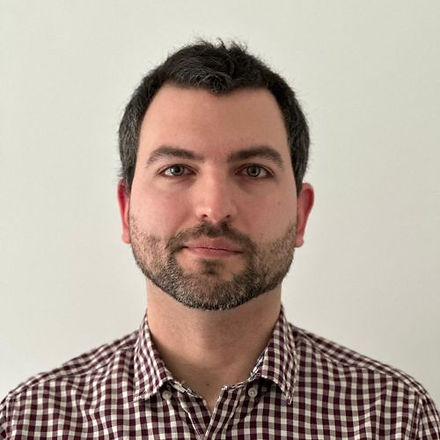
Interview with
Daniel Garcia Saenz
Name: Daniel García Sáenz
Nationality or Ethnicity: Spanish (Basque)
Where do you live?: San Sebastian, Gipuzkoa, Spain.
Languages: Spanish, Basque, English, German, French and Japanese. I also speak a bit of Italian and understand Portuguese.
Member since:
26 de agosto de 2026
1. What’s your story? How did you get into all these languages?
Being born in the Basque Country, I had the opportunity to learn both Spanish and Basque from an early age, and I consider both of them my native languages. Afterwards, I started to learn English in school since I was a kid, and I loved the learning process of a language, and how, little by little, a language could make sense in your head and be able to understand it more and more as long as you expose yourself to that language, by reading whatever you loved or just watching a TV series you liked. I ended my studies in English at the age of 21, when I obtained my CPE certificate (C2).
I first came into contact with French when I was around 14, and, although I couldn’t focus on learning that language at the moment, I felt great whenever I went to Hendaye and other French cities near San Sebastian and I was able to ask for some candies or for a loaf of bread in French, what encouraged me to keep learning this language, even if I couldn’t in that moment, in the near future. I started going to French private classes some time later, at the age of 18, at the same time when I started studying Mechanical Engineering. I stopped learning it for some time, and I obtained my C1 certificate some years ago.
Later, seeing that learning new languages, something that I love, could open me job opportunities in the future that could be useful for my two degrees, at the age of 22, when I was finishing Mechanical Engineering and studying also a Business Administration degree, I felt German, a language that I considered difficult and therefore, a challenge, could be really useful for my technical profile, knowing the importance of German Automotive and Technology market. So, I just looked for a German language school and start learning this new language, until some years ago, when I passed the C1 certificate.
I would like to explain that, even if I stopped learning these languages academically, I never stopped using them, by reading books (I tried to read at least 1 book in each language every year), and by listening to music, radio, watching series in different languages… And I am able to use some of them while working, mostly Spanish, Basque and English, and from time to time German and French.
Nowadays and for 3 years, I am focused on Japanese, having already obtained the NOKEN N3 certificate, and looking forward to obtain the NOKEN N2 soon. I decided to learn Japanese, fist of all, because I felt it was a real challenge to learn a language that didn’t use my same alphabet/writing systems, but apart from that, because I love the Japanese culture, and I believe that learning a language helps you learn a lot from the culture of a country. I am happy and motivated to learn more about this language, and to start learning new ones!
2. Which language(s) do you wish you could spend more time practising?
At the moment, as I am very focused on Japanese, and as it is such a different language, I feel I have a lot of margins to learn and improve and so, I would like to practise principally Japanese. Apart from that, German and French could be interesting for me to practise more, as Spanish, Basque and English are languages that I use everyday.
3. What are some languages you’d like to learn in the future?
It is a tricky question, as I would like to learn a lot of them and, unfortunately, time is limited. Anyway, there are two languages, Italian and Portuguese that I feel I could study easily due to the similarities with Spanish and French and that, even if I am able to read and communicate a bit in them, I would like to spend some time to study them properly, improve my level and become fully confident in speaking and writing them.
Two other languages that I would be interested in are Chinese and Russian, for the same reasons as for Japanese: I feel that they are a real challenge as they don’t use the same alphabet/writing systems and, apart from that, as the Chinese and Russian culture is different from my own, both countries have a long history and I find them really interesting.
4. So let’s be honest, which language has the most charm for you?
It is not easy to just choose one, but I feel that one of the most charming languages could be Italian, due to its sound, rhythm and emotional expressiveness linked to expressive gestures.
Apart from this one, I also feel that Japanese has a lot of charm due to its semantic richness rooted in respect and in the person you are addressing to. I find that the rhythm and sounds are really interesting too.
5. What’s the greatest pleasure you get from speaking so many languages?
As in San Sebastian, the city where I live, there are a lot of tourists, I love when I can help them if they need help, being able to surprise them by talking in their native language. Seeing their face of surprise and gratitude, apart from proving myself that I can communicate effectively with native speakers, is something that encourages me to keep improving the languages I already know and learn new ones.
6. Some people say the world is really just going to have a few languages left in a 100 years, do you think this is really true?
It is true that many people tend to learn only their native language and English as an international language for communicating with people from other countries. Technology is also discouraging some people from spending time learning new languages, as they believe that AI-driven tools will allow them to communicate efficiently with anyone. Although this may be true to some extent, there are certain aspects of communication that technology cannot fully replicate, such as conveying emotions through specific expressions or using the cultural nuances inherent in a language to express feelings.
For this reason, I believe there will always be people who are interested in learning about other cultures through their languages. Therefore, I do not think that only a few languages will survive in the future. It is true that some minority languages may disappear over time, but many others will continue to exist and even grow in number of speakers.
Furthermore, technology will not act only as a "language killer"; it will also help preserve information from different languages. It will make it easier to share documents, videos, and other learning materials, providing valuable resources for anyone interested in learning a new language. As a result, there will be more and more opportunities for people who wish to study foreign languages.
7. What is your message to young (and not so young) people out there who are interested in studying multiple languages?
My message to young people and to adults who are interested in learning several languages, is simple: don't be afraid to start, even if the process seems difficult at first. Learning a language is not only about memorizing vocabulary and grammar; it is also a way of discovering new cultures, perspectives, and ways of thinking.
Many people believe they are too old to learn a new language, but I think that motivation and consistency are much more important than age. Even studying a little every day can lead to great progress over time.
In addition, speaking different languages can open many doors, both personally and professionally. It allows us to meet people from different backgrounds, travel with more confidence, and access information that would otherwise remain unavailable to us.
Therefore, my advice is to enjoy the journey, be patient with yourself, and remember that every small step brings you closer to your goal.