The International Association
of Hyperpolyglots
HYPIA
Est. 2016
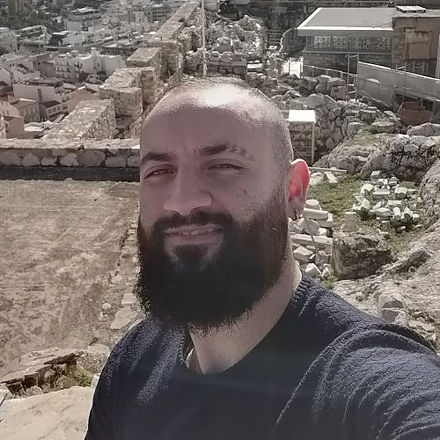
Interview with
Giuseppe Tavella
Name: Giuseppe Tavella
Nationality or Ethnicity: Italian (Calabria)
Where do you live?: Currently in Milano Marittima (Emilia-Romagna, Italy) but that changes
Languages: Italian, Sicilian (Calabrese), English, Romanian, Spanish, French, German
Member since:
16 de julio de 2025
1. What’s your story? How did you get into all these languages?
It all started when I was living in Transylvania. I had some free time I wanted to invest properly (well that’s how I always think, anyways) and I thought to myself, knowing languages is a universal skill I can re-use across careers and it’s always useful no matter where I go. Because of my freedom and flexibility mindset, I still haven’t figured out what I wanna do in life, and languages are a constant that will always be useful. So it all started with Romanian.
2. Which language(s) do you wish you could spend more time practising?
Romanian. I mean, improving the grammar. It has its own peculiar grammar and I already know I’m gonna spend more time improving it, but for now the priority is getting to a C1 level in German, so that my brain can optimize its subconscious learning processes for one language at a time.
3. What are some languages you’d like to learn in the future?
Russian - because of the diverse culture, economical system, language diversity/difficulty and rarity once you know it. Modern Greek and Hebrew – both of them for the sheer beauty. Latin – in addition for the sheer beauty, because I love its conciseness as well as my Latin roots.
4. So let’s be honest, which language has the most charm for you?
As an Italian, I find French, Greek and Spanish (Castilian) to be the sexiest - for sounds and rhythmicity.
5. What’s the greatest pleasure you get from speaking so many languages?
- My own mental pleasure, brain orgasm
- Connecting instantly with people
- Understanding different mental frameworks
- My own mental flexibility and more creativity, when I change languages it’s like I’m “passing between worlds” and the pleasure I get from molding an abstract, formless concept into specific concrete mental pathways (so the language).
6. Some people say the world is really just going to have a few languages left in a 100 years, do you think this is really true?
Human beings want to feel they’re unique and that they’re part of the same big thing at the same time. We want creativity just like we need standardization. We adopt a standard so that we are all on the same page, but at the same time want to feel artists/creatives of something unique in our lives. Just like AI is not going to replace jobs but create new ones, human beings will continue to adopt and try to create “standard, unifying” languages to overcome barriers, with everyone still wanting to feel part of something more intimate, familiar and unique. It’s both okay and both have sense - both the creative/unique/rare language, as well as the standard/global/unifying language. They can co-exist, no one is going to replace nothing.
7. What is your message to young (and not so young) people out there who are interested in studying multiple languages?
Don’t wait for anyone to teach you anything. You don’t just go to a school to learn a language - instead, you take initiative, you lead the way in your own life. The idea that you don’t learn a language because you don’t like it - what does that mean exactly, I don’t like it? You mean, you have an emotional association with that language, that is not energizing you. But where does that come from? Is that serving you? Learning a language has a lot to do with tapping into your creativity/child-like part of you. For the most part until you get to fluency, you’re bypassing the rational mind. The rational mind is not the one responsible for remembering words or building phrases, there’s a much more powerful part of your brain.