The International Association
of Hyperpolyglots
HYPIA
Est. 2016
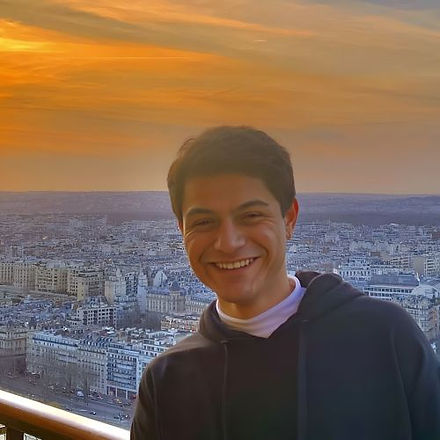
Interview with
Igor Cortez
Name: Igor Patrick Alves Cortez
Nationality or Ethnicity: Brazilian
Where do you live?: Brazil (at the time of this interview)
Languages: Portuguese, English, French, Spanish, Italian, German.
Member since:
6 de junio de 2026
1. What’s your story? How did you get into all these languages?
I was born in Brazil and my interest in languages started when I was a child playing video games. Most of the games I had were in English, and I was frustrated because I could play them, but I could not understand the stories behind them. I had no computer or internet access at home, and no one in my family spoke a foreign language, so my only tool was an English dictionary. Little by little, I began to understand not only games, but also songs on the radio. That feeling of discovering a new world through words made me want to continue.
Later, my love for geography and history made me curious about the languages spoken in different countries. I learned Spanish, then German, then French, and eventually Italian. Each language entered my life with a different purpose: curiosity, study, travel, friendship, or the desire to connect more deeply with people.
One of my greatest dreams was to study abroad. For a long time, it seemed distant because international programs were expensive and difficult to access. However, learning languages gave me opportunities that I would not have had otherwise. French, in particular, helped me get closer to that dream through my university’s partnership with the Sorbonne. I also started teaching French to beginners, which allowed me to save money and finally go abroad for the first time.
That experience showed me that language learning is not only an intellectual interest or a hobby. In my life, it became a path to achievement, independence, and personal growth.
2. Which language(s) do you wish you could spend more time practising?
I wish I could spend more time practicing German and Italian. German was one of the languages that challenged me the most, and I feel that it deserves more attention because of its structure, precision, and richness. Italian, on the other hand, is a language I associate with friendship, affection, and cultural immersion. I learned it very intensely in a short period of time before traveling to Italy, and I would love to keep improving it so that I can express myself with more nuance and naturalness.
3. What are some languages you’d like to learn in the future?
In the future, I would like to learn languages that open doors to very different cultural worlds. I am especially interested in languages such as Russian, Arabic, Mandarin Chinese, and perhaps an African or Asian language that would challenge me to think in a completely different way. I am attracted not only by the linguistic difficulty, but also by the history, literature, music, and worldview that each language carries.
4. So let’s be honest, which language has the most charm for you?
It is difficult to choose only one, but I would say Portuguese and French have a special charm for me, each in a different way. Portuguese is my native language, so it carries my emotions, memories, family history, and identity. It is the language in which I first understood the world, and for that reason it will always have a unique place in my heart.
French, on the other hand, has a charm connected to elegance, culture, and personal achievement. I started learning it at university with the dream of studying abroad, and it eventually helped me reach that goal. French also became the first language I taught to beginners, which made my relationship with it even deeper. For me, Portuguese feels like home, while French feels like a door I managed to open through persistence.
5. What’s the greatest pleasure you get from speaking so many languages?
The greatest pleasure is the possibility of creating real connections with people. Speaking another person’s language, even imperfectly, changes the atmosphere of a conversation. People often become more open, more comfortable, and more willing to share their world with you. I also love the feeling of understanding something that was once completely closed to me: a song, a book, a conversation, a joke, or a cultural reference. For me, languages are not trophies to collect, but living bridges that allow me to see the world through someone else’s words.
6. Some people say the world is really just going to have a few languages left in a 100 years, do you think this is really true?
I think it is possible that some major languages will become even more dominant in international communication, especially because of globalization, technology, and economic influence (like French in past centuries and English today). However, I do not believe the world will simply be reduced to a few languages. Languages are connected to identity, memory, family, culture, and emotion. People do not use language only to exchange information; they use it to belong, to tell stories, to preserve traditions, and to express who they are.
7. What is your message to young (and not so young) people out there who are interested in studying multiple languages?
My message is: start with what you have, and do not wait for perfect conditions. I learned all my languages on my own, without relying on traditional courses. When I began learning English, I had only a dictionary and a lot of curiosity. I did not have access to expensive classes or sophisticated tools, but I had a reason to learn. That reason was enough to begin.
You do not need to be perfect to communicate. Sometimes, the simple effort to speak someone’s language is already enough to create a meaningful connection.